
Neuropsychological Rehabilitation · applied science
You know how to assess. But how do you rehabilitate?
Rehabilitation is not a protocol — it is deciding, for each patient, what to do and why. BRAIN takes the complaint, turns it into hypotheses and goals, and delivers the intervention plan with strategies, examples and a clinical report.
Built on the world's first model of Neuropsychological Rehabilitation in Psychiatry, developed by Dr. Fabricia Loschiavo and Dr. Barbara A. Wilson, BRAIN translates the science of rehabilitation into everyday clinical practice.
Get early access
BRAIN is coming to English-speaking clinicians. Leave your email and we will get in touch.
Thank you. We will be in touch shortly. Want to skip the wait? Book a 20-minute call and see BRAIN on one of your own cases.
Book a 20-minute callHow it works
From the complaint to the intervention plan.
Record the complaint
Clinical information, functional assessments and the patient's context in one place, guiding you through each step of the clinical formulation — no loose sheets, no side spreadsheets.
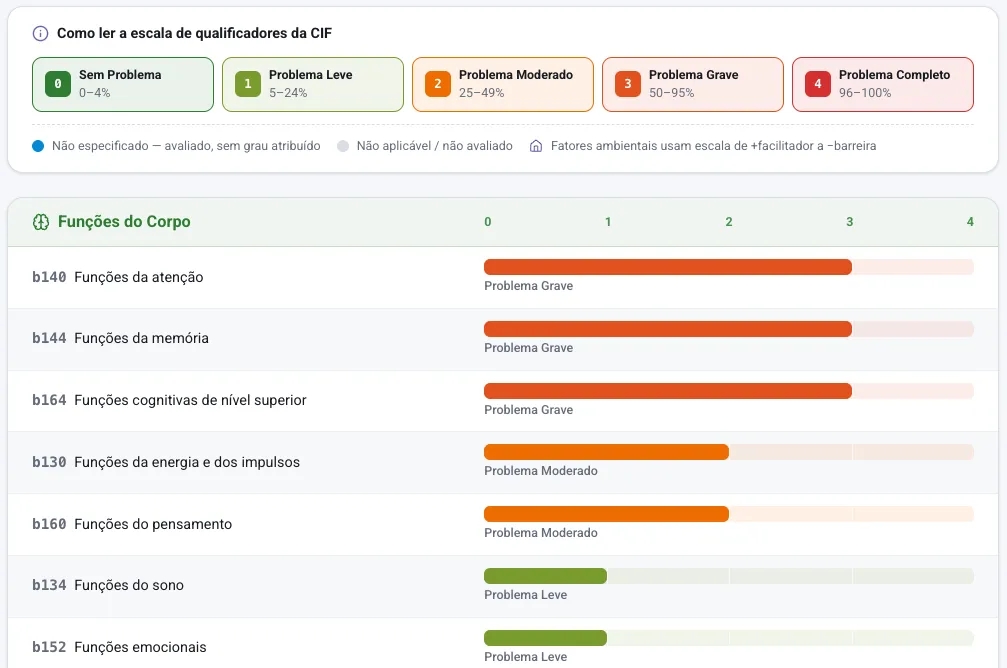
Formulate hypotheses and goals
BRAIN relates the patient's data to the Neuropsychological Rehabilitation model, turns complaints into clinical hypotheses and leads you to functional, occupationally relevant goals (STAR goals).
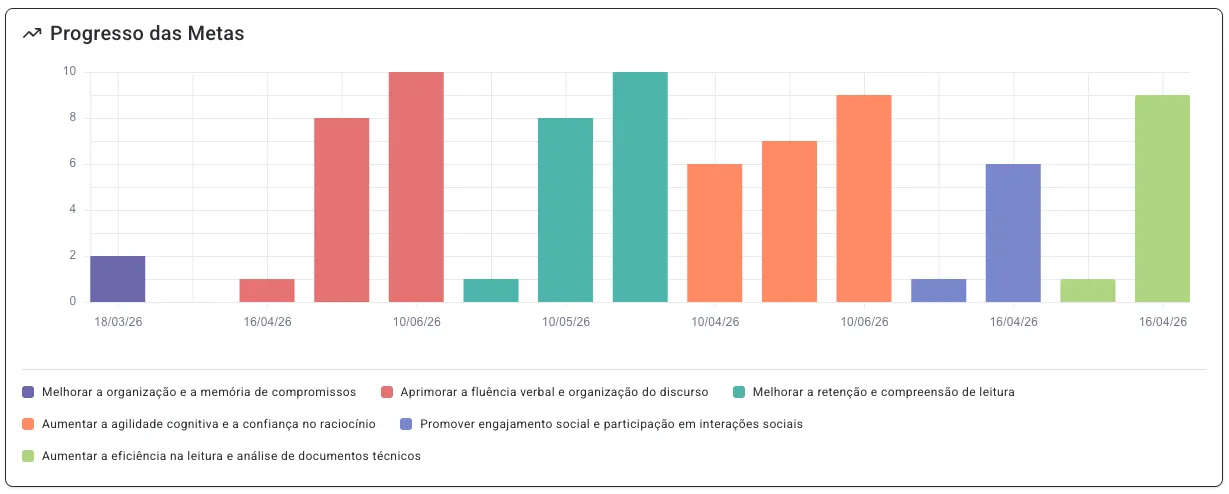
Receive the intervention plan
For each goal, techniques and strategies grounded in the ICF and its Core Sets — each described, with examples and a progression of complexity — closed by a report explaining the clinical reasoning.
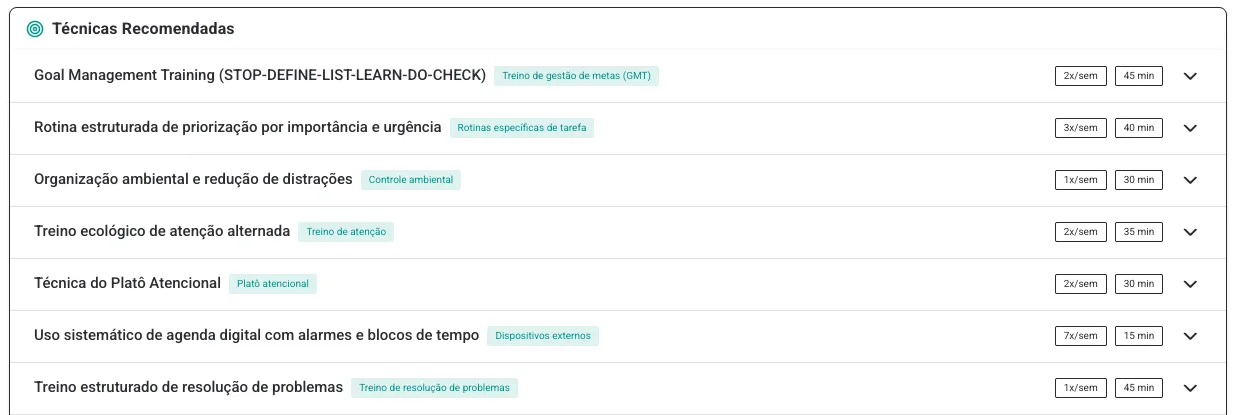
Track effectiveness
Complete, traceable reports for referrals and follow-up, pre/post comparison and team review. When data is missing, BRAIN says so.
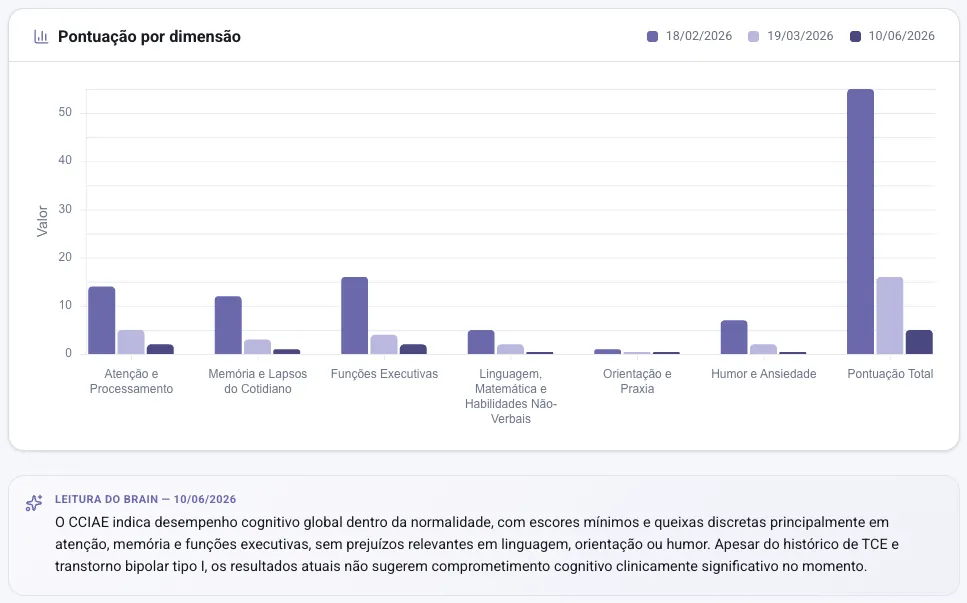
Interface shown in Portuguese. BRAIN is available in English and Spanish.
Who it is for
For every professional who rehabilitates.
- Psychologists and neuropsychologists
- Occupational therapists
- Speech-language pathologists
- Physiotherapists
- Physicians
- Multidisciplinary teams
Scientific grounding
Science translated into technology for clinical practice.
The model behind BRAIN was developed with Dr. Barbara A. Wilson and published in Clinical Neuropsychiatry — Journal of Treatment Evaluation (2018) and in the Global Journal of Medical Research: Neurology & Nervous System (2021). More than twenty years of clinical practice, built into the product.
- 2018Clinical NeuropsychiatryJournal of Treatment Evaluation
- 2021Global Journal of Medical ResearchA Neurology & Nervous System